The industry is bullish about AI, especially generative AI, as a means to lower costs and increase production. Today’s Marketeers are caught between operationalizing it while maintaining effectiveness. They’re facing bot-wrought challenges on this journey, like a lack of emotional resonance, consumer concerns of manipulation, and even fraud. This has revealed most organizations lack the systems necessary to adapt to new technologies, evidenced by the 95% of Generative AI pilots that fail.
Brands were facing a $76 billion dollar content quality and brand attribution problem before AI
Consumers live on digital platforms. Success on these platforms requires more and more content to feed the algorithm. This necessitates a diverse content production system with in-house teams, creators, and agencies. AI seems an obvious way to help meet this challenge. But there’s an existing challenge that most brands haven’t solved.
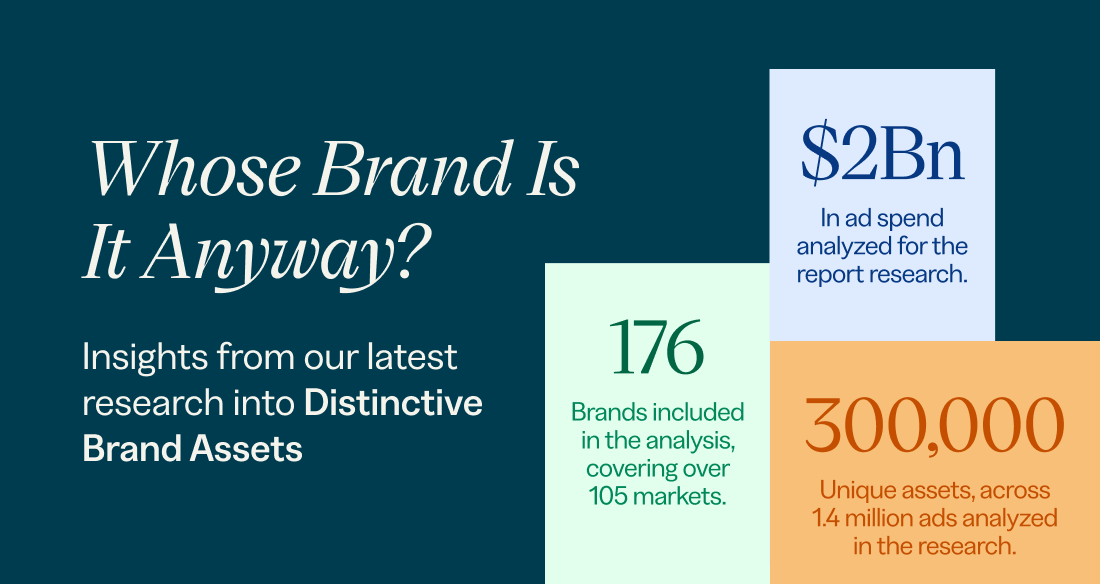
Creative is the biggest driver in terms of impact for brands. But most ads don’t meet the minimum requirements to succeed on their unique ad placements. This amounts to a $76 billion dollar media opportunity in the market. At the same time, there’s more competition, creating additional challenges for brands to even get recognition for their work. Despite the millions of dollars and decades of work that brands have put into developing distinctive brand cues (think logos, taglines, colors, packshots), 37% of ads use fewer than two DBAs, and only 25% hit the "elite" mark of four or more. In other words, quality aside, these ads aren’t even being given credit to that brand (or the team that made it!)
More Is Not a Marketing Strategy – especially at the Cost of Quality
In an era defined by what CreativeX Founder and CEO Anastasia Leng calls "machine-made abundance," brands are producing content faster than they can brief it. The industry is entering the age of "self-driving advertising," and the challenge is no longer production, but maintaining creative effectiveness and brand relevancy amidst the noise.
“Everyone is building an AI strategy, and most of these strategies center around producing more content. But the fundamentals of marketing have not changed. Your brand is putting out messaging to convince someone to use your products or services. So whilst you can do more of something, it does not necessarily mean it’s driving more impact,” describes Mark Harrison, VP of Sales at CreativeX.
Generative AI-driven content production isn’t a shortcut to better results, with ‘AI slop’ driving a growing backlash from consumers. “They’re creating more content today, but there are no quality checks. So how do brands actually leverage this opportunity in a way that drives growth in their business? The quality they put out there is paramount,” Harrison concludes.
Implement a Creative System of Control to Drive Impact with AI
“Marketers still want to be the ones to set the destination, and they need to be the ones who can grab control of the wheel should anything go wrong,” says Leng.
“In this era of self-driving advertising, brands need systems that not only give you that control, but enable you to use AI in a way that allows you to accelerate and go faster. You should be taking advantage of these tools, but you should be doing it in a way that preserves your ability to ultimately control and guide these systems to reach a destination that you want to reach.”
A creative system of control is akin to a Universal Remote for the modern marketeer. It aligns a complex tech stack that can span up to 300 programs. It creates the capabilities necessary to take strategy through to execution across global organizations with agility and with increasing effectiveness.
A System of Control needs these functions:
- Unifying Silos: Bring together the right teams across insight, media, and creative, because they work together to execute strategy through to success. Eliminate blind spots in data coverage and merge siloed sources of data together to drive the right internal narratives and external outputs necessary for growth.
- Operationalizing Change: Move away from PDFs and email chains and towards a single dashboard that gives you real-time, global insights. This single source of truth allows brands to realize a world where every single ad that goes live meets its definition of creative excellence, making change more actionable and accountable.
- Validated Learning: By streamlining measurement with analytics across multiple sources of data in real time, your brand can continually validate their data and its impact to scale the adoption of these tools across their organization. This crucial step is often what’s missing from new technologies, limiting the ability for them to scale.
This system is tantamount to success for today’s marketers because, “this is an era where increasingly machines will talk to machines on our behalf to get things done. It's an exciting stage, but it's also scary. We're handing over control of something that is the biggest intangible asset on our balance sheet, namely our brand, which is what our creative really is there to represent,” concludes Leng.
Build a Living Source of Truth Unifying Strategy, Content Production, and Media
Distinctive eras of technology are shorter and shorter, whether it’s new ad placements, inventions, or trends. Brands currently neither have the luxury of time to adapt nor the system in place to be agile in adopting new technologies. Businesses don’t need to have just an AI strategy, they need a strategy to successfully operationalize AI and the inevitable changes that the market will face. What’s next isn’t decades away, it may be months away.
As Georgia Sanderson-Nash, Director of Enterprise Sales at CreativeX illustrates, “in just the past ten years, I have watched the ecosystem shift from TV all the way to digital, and within digital, new platforms, new ad types, and now Gen AI. We know there will be more to come. It's an ever-changing landscape.”
“Brands that want to win really need a living source of truth that unifies media, content production, and strategy. The emphasis is on ‘living,’ it’s not a static insight, it’s something that both responds in real time while also develops in depth and breadth over time.”
→ Future-proof your marketing with CreativeX today.