Whose Brand is it Anyway?
As GenAI and creator networks fragment brand identity, how do you maintain recognition? Explore insights on DBAs and the attribution challenge in our new report.
Written by
Isobel Bruce
April 1, 2026
3
min read
-> Download the full report ‘Whose Brand is it Anyway?’
A great ad must do two things: it must perform, and it must be remembered as yours.
For decades, brands have been investing in establishing and strengthening their distinctive signals. Memory cheat codes that instantly bring the consumer back to the brand – be that a color (the iconic Cadbury purple), tagline (“Have a break, have a KitKat”), or packshot (the snap of a Pepsi can being opened).
These brand cues, sensory triggers that act as mental triggers for the brand, eventually evolve into Distinctive Brand Assets, which drive recognition without the brand name being present.
Distinctive Brand Assets are some of the most valuable tools in a brand’s arsenal. They drive sentiments of familiarity and trust, and over time, their impact compounds. Every time a consumer encounters one of these signals, their recognition gets a little bit faster, a little bit more automatic, and a little bit more valuable.
The more consistently your brand signals are deployed, the stronger they get. The stronger they get, the less it costs to activate them. This cycle of compound equity is the closest thing marketing has to compound interest.
But as Celine Baudin, Global Head of Content and Integrated Communications, Bayer, put it, “As content production accelerates across markets and brand partners, maintaining consistent brand identity and recognition becomes significantly more complex.”
Brands are no longer the sole purview of content and branding teams. Responding to changing demands (platforms want more content, consumers want digitally native content), brands are increasingly ‘loaning’ their identity to GenAI tools and creator networks.
This fragmentation of brand ownership has impacted how brands are using the cues they worked so hard to establish, and created a growing need for a system of control to maintain visibility into how their brand is showing up.
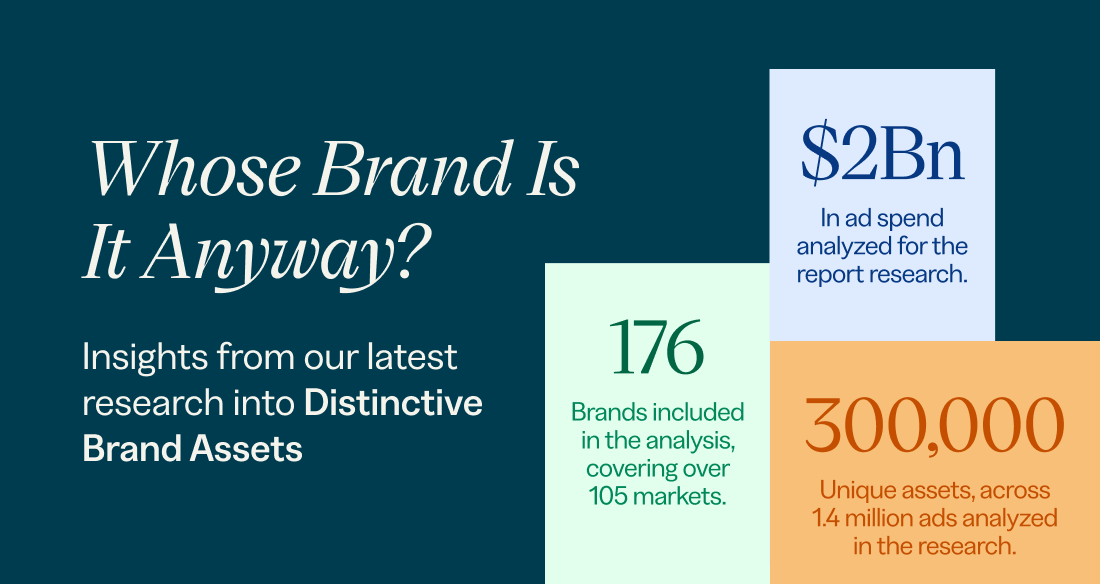
CreativeX analyzed more than $2 billion in advertising spend over four years, reviewing 300,000 creatives across 1.4 million ads from 176 brands in 105 countries.
The findings show a clear performance upside when brand signals are used effectively, including 28% higher ad recall for ads using four or more DBAs, and a 45% reduction in cost per completed view.
But the opportunity gap is huge. 61% of ads use only one or two brand cues, and by moving to a two-cue minimum standard, the industry could unlock $52.5 billion in potential savings.